Picture a pool service company in Mesa. Over a few years it collected about 1,200 email addresses from invoices, a website form, and a sign-up sheet at the front desk. Nobody had time to write a newsletter, so the list sat untouched. Then, in March, the owner sent a big spring tune-up promotion to everyone at once.
The replies were not what he hoped for. A handful of people booked. A lot more unsubscribed. A few wrote back asking who he was. And some just clicked "report spam," because to them, an email from a company they had not heard from in two years looked exactly like spam.
The question of how often to send marketing emails usually gets framed as "how much is too much?" For most small businesses, the bigger problem is the opposite. Here is how to find a schedule that keeps you remembered without wearing people out.
The Short Answer
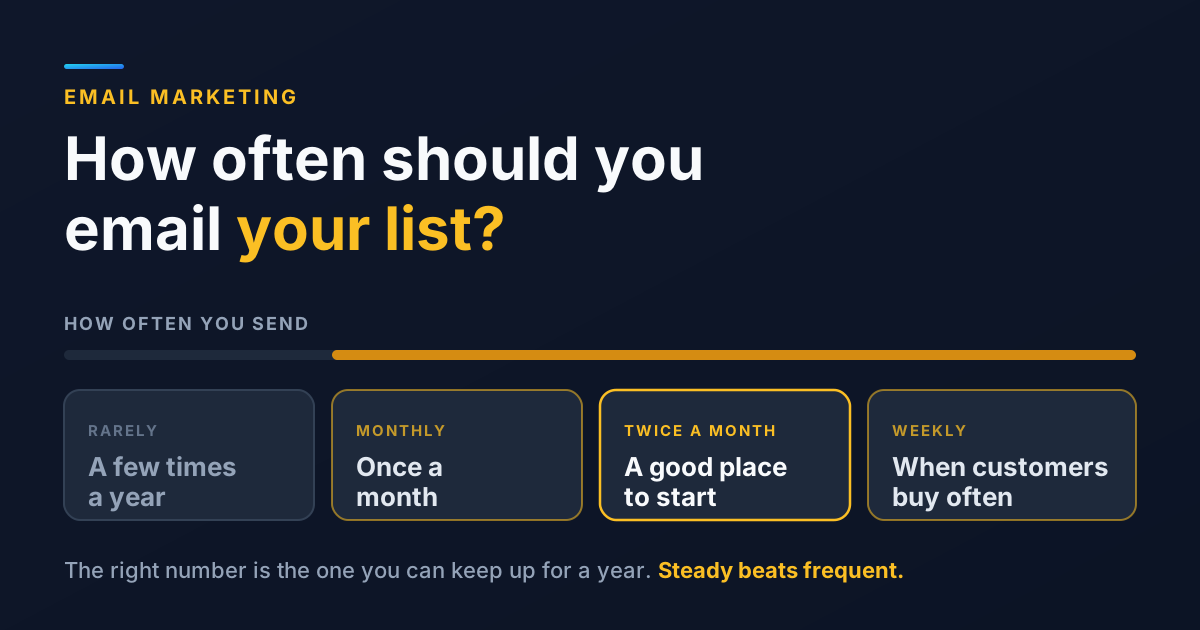
Most local and small businesses do well sending somewhere between once a month and once a week. If you are starting from nothing, twice a month is a comfortable middle: often enough that people remember you, rarely enough that you can actually keep it up.
But the number matters less than one rule: be consistent. A business that sends a useful email on the first Tuesday of every month will usually do better than one that sends five emails in March and nothing until September. People get used to hearing from you, inbox providers see a steady sender, and you build a habit instead of a scramble.
Why Sending Too Rarely Hurts More Than You Think
Owners often worry about bothering people, so they send very little. That feels polite, but it causes three problems.
1. People forget they signed up
Someone who gave you their email at checkout six months ago may not recognize your name in their inbox today. When they do not recognize the sender, they are much more likely to delete it, unsubscribe, or mark it as spam.
2. Spam complaints pile up on the rare send
Google asks senders to keep their reported spam rate below 0.1% and never let it reach 0.3%, according to its email sender guidelines. On a list of 1,000 people, 0.3% is just three complaints. A long gap followed by a sudden promotion is one of the easiest ways to get there, and a high spam rate can push future emails into the spam folder. Our guide to why business emails go to spam covers the rest of the deliverability picture.
3. Your list goes stale
People change jobs, abandon old inboxes, and move away. When you only send once or twice a year, you do not notice the dead addresses until a big chunk of your list bounces at once. Regular sending lets you spot and clean those addresses gradually.
And Why Sending Too Often Hurts Too
The other side is real as well. If every email is a sale, or you are sending several times a week without much to say, people tune out. Opens drop, unsubscribes climb, and the subscribers who stay get used to ignoring you. The fix is rarely "send less" on its own. It is usually "send emails that are worth opening," and then let the schedule follow.
A Starting Point by Type of Business
There is no single right number, but some businesses naturally have more to say and buy more often. Use this as a starting point, then adjust based on your own results.
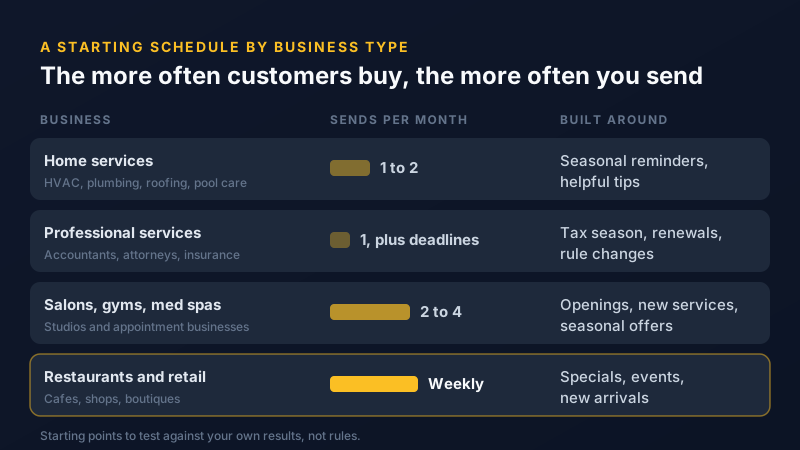
- Home services (HVAC, plumbing, roofing, pool care, landscaping): once or twice a month. Customers do not need you every week, but you want to be the name they remember when the AC quits. Add seasonal reminders, like a pre-summer tune-up in the Valley before the heat hits.
- Professional services (accountants, attorneys, insurance, financial planners): monthly, with extra sends around real deadlines like tax season or open enrollment.
- Salons, gyms, med spas, and studios: two to four times a month. Clients book often, so openings, new services, and seasonal offers give you plenty to say.
- Restaurants, cafes, and retail shops: weekly. Specials, events, and new arrivals change constantly, and customers can act on them right away.
Four Questions That Set Your Number
1. How often does something worth sharing actually happen?
New menu items every week means you can email every week. A roofing company has fewer announcements, so it leans on helpful content instead: what to check after a monsoon, how to tell if a repair can wait, what a typical inspection covers. If you would have to invent filler to hit your schedule, the schedule is too aggressive.
2. How often do your customers buy?
A coffee shop customer might buy three times a week. A water heater customer might buy once every ten years. Match your rhythm to the buying cycle, and lean on reminders and referrals when the cycle is long.
3. Can you keep it up for a full year?
Be honest about your time. A monthly email you send every single month beats a weekly email you abandon in February. Start with the pace you are sure you can sustain, then add more once it is a habit.
4. What did you promise when they signed up?
If your sign-up form says "a monthly tip from our team," sending three emails a week is a broken promise, and it shows up as unsubscribes. Tell people how often you will write, both on the form and in your welcome email, then stick to it.
How to Tell If You Are Sending Too Much or Too Little
Your email platform already shows the numbers you need. Compare each send to your own average over the last few months instead of chasing an industry benchmark.
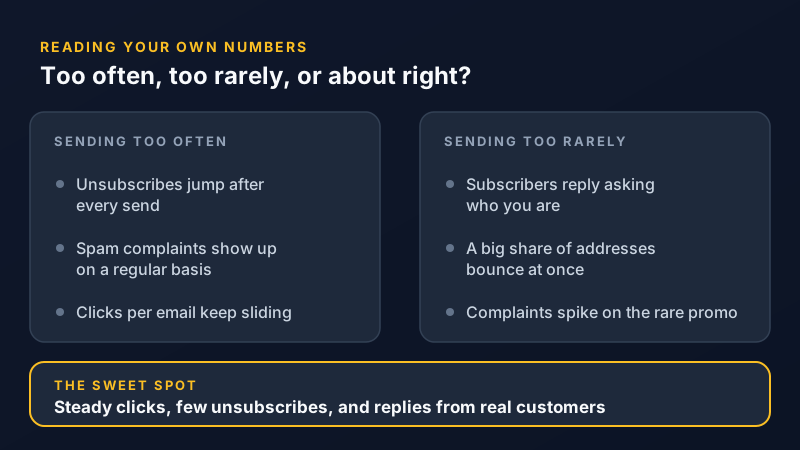
- Unsubscribes after each send. A few are normal and healthy. If the number climbs every time you send, you are probably sending too often, or sending too many offers in a row.
- Spam complaints. Any steady trickle is a warning. Check whether the complaints come from older addresses that have not heard from you in a while.
- Clicks. Clicks tell you more than opens, since some email apps load images automatically and inflate open counts. If clicks per email keep sliding, the content or the pace needs a change.
- Calls, bookings, and sales. This is the number that matters. Use tagged links and call tracking so you can see whether email is bringing in business. Our guide to telling which marketing brings in customers shows a simple way to set it up.
How to Send More Without Wearing People Out
- Mix helpful and promotional. If every email asks for money, people stop opening. A simple rhythm like two helpful emails for every offer keeps your list glad to hear from you.
- Segment your list. Past customers, new leads, and people interested in one specific service do not all need the same email. Even two or three groups help. Our guide to building an email list covers simple ways to tag people as they sign up.
- Let people choose. Many email platforms let you offer a "send me less" option next to the unsubscribe link. Someone who wants a monthly update instead of a weekly one is a subscriber you keep.
- Re-introduce yourself before a long-overdue send. If your list has been quiet for months, start with a short, friendly note reminding people who you are and how they signed up, before any promotion goes out.
Make the Schedule Easy to Keep
The businesses that stay consistent usually do not write from scratch every time. Block one hour a month to write the next few emails at once. Turn each blog post into a short email with one link back to the full article, the same way you would repurpose it for social media. And spend a few extra minutes on the line people see first, since good subject lines do a lot of the work.
Email remains one of the most cost-effective channels a small business has, which we cover in why email marketing delivers strong ROI. But it only pays off when you show up regularly. If you want help setting a schedule, writing the emails, or cleaning up a list that has gone quiet, our email marketing team works with businesses across the Valley, from Mesa to Scottsdale. Get in touch and we will take a look at your list.
Frequently Asked Questions
How often should a small business send marketing emails?
Most small businesses do well sending between once a month and once a week. If you are just starting, twice a month is a good middle ground. More important than the exact number is sending on a steady schedule you can keep up all year.
Is sending one email a month enough?
For many service businesses, yes. A monthly email keeps your name familiar without asking much of your time. Businesses whose customers buy often, like restaurants, salons, and retail shops, usually benefit from sending more often.
How do I know if I am emailing my list too much?
Watch for unsubscribes that climb after every send, regular spam complaints, and clicks per email that keep falling. Compare each send to your own recent average. If several sends in a row look worse, slow down or send more helpful content and fewer offers.
What should I do if I have not emailed my list in a long time?
Do not lead with a big promotion. Send a short, friendly note first that reminds people who you are and how they signed up, and make it easy to unsubscribe. Then settle into a regular schedule so the list never goes quiet that long again.