Ask a small business owner why they stopped posting on social media and you will almost always get the same answer: they ran out of things to say. It is rarely true. What they actually ran out of is time, because they are treating every single post as a brand new idea that has to be invented on a Tuesday night.
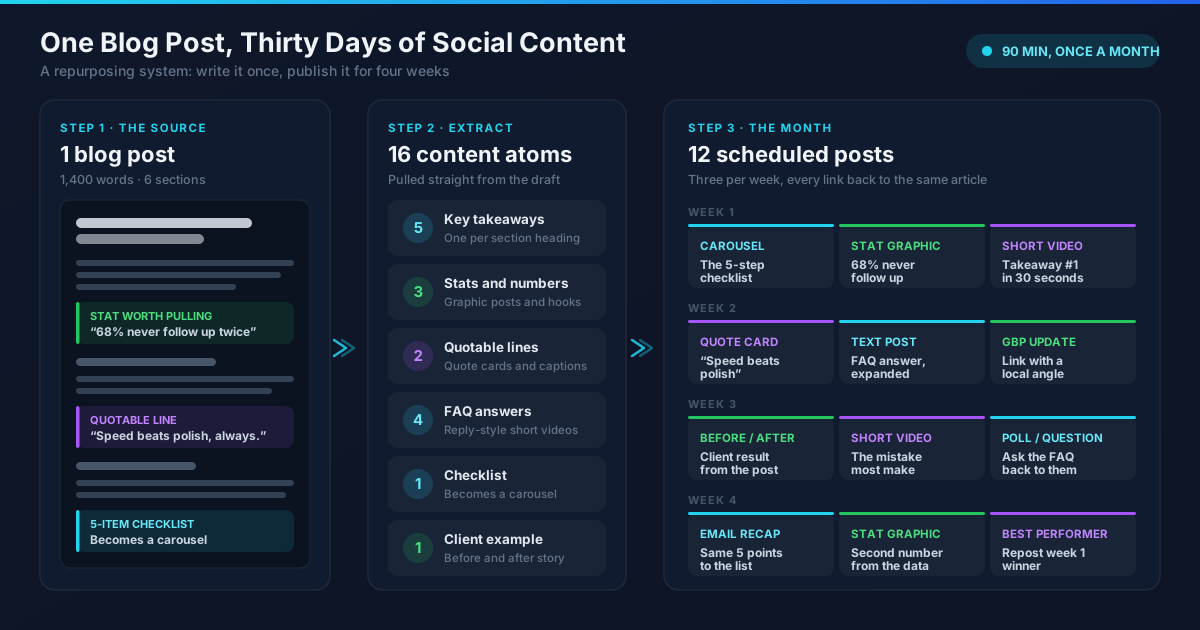
There is a much easier way to work. Write one solid article a month, then mine it. A single 1,400 word post contains enough distinct ideas to fill four weeks of a posting calendar, and pulling them out takes far less energy than starting from a blank screen twelve separate times.
Start With a Post Worth Repurposing
Not every article earns a month of promotion. The ones that do answer a question a real customer has asked you, contain at least one number or result, and break down into clear sections. If you are choosing between two posts, pick the one that solves a specific problem for a specific person. Broad "why marketing matters" pieces are hard to slice up because there is nothing concrete to pull out.
If you do not have a post like that yet, write one first. Good keyword research will point you at the questions people are already typing, and those questions make the best source material because the answers are naturally quotable.
Mine the Post for Content Atoms
Read the article once with a highlighter, digital or otherwise, and mark six kinds of things: every section heading, every statistic, every line you would be happy to see quoted back at you, every step in any list, every FAQ answer, and every real example or client result. That is your raw inventory. A typical post yields somewhere between twelve and twenty of these, and each one is a standalone post waiting to happen.
The important shift is that you are not summarizing the article twelve times. You are publishing twelve different ideas that happen to live inside the same article. Nobody scrolling past sees repetition, because each post makes its own point.
Match the Format to the Platform
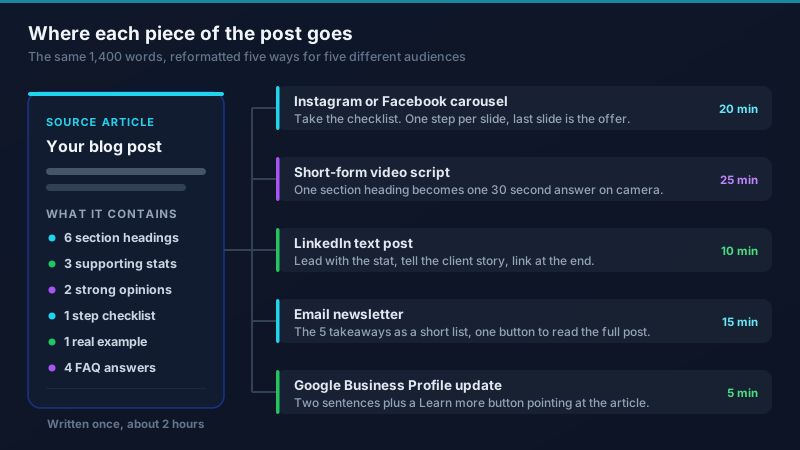
The atoms are the same everywhere, but the packaging is not. A checklist works beautifully as a carousel because each step is its own slide and people swipe to the end. A statistic works as a single bold graphic. A strong opinion works as a quote card or as the first line of a text post. An FAQ answer works as a thirty second video where you look at the camera and answer the question exactly the way you would answer it on the phone.
Send the same content to your email list too. The five takeaways become a short list with one button to read the full article, and that email will almost certainly outperform any single social post you publish that month. If you are still building that audience, our guide to building an email list from zero covers the setup.
Batch It All in One Sitting
The reason most content calendars collapse is that the work is spread across thirty days. Doing it all at once is faster and produces better work, because you stay in the same headspace instead of context switching every evening. Block ninety minutes, once a month, and run the same five steps every time.
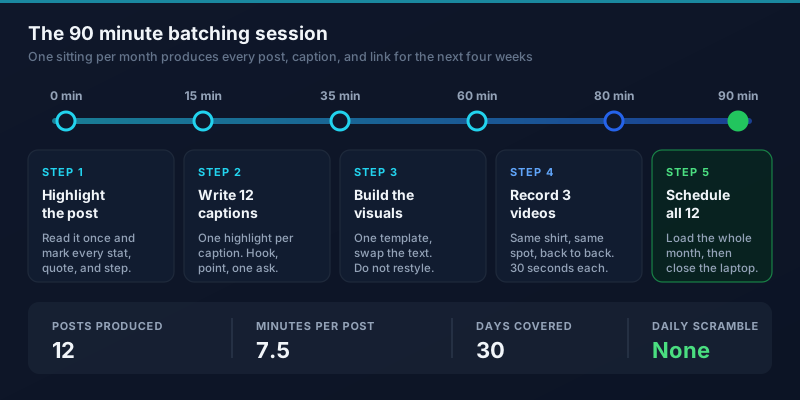
Use one visual template and swap the text rather than designing each graphic from scratch. Record all your videos back to back in the same spot wearing the same shirt, since nobody is checking. Then load everything into a scheduler in one pass and close the laptop.
Space the Posts Out and Vary the Ask
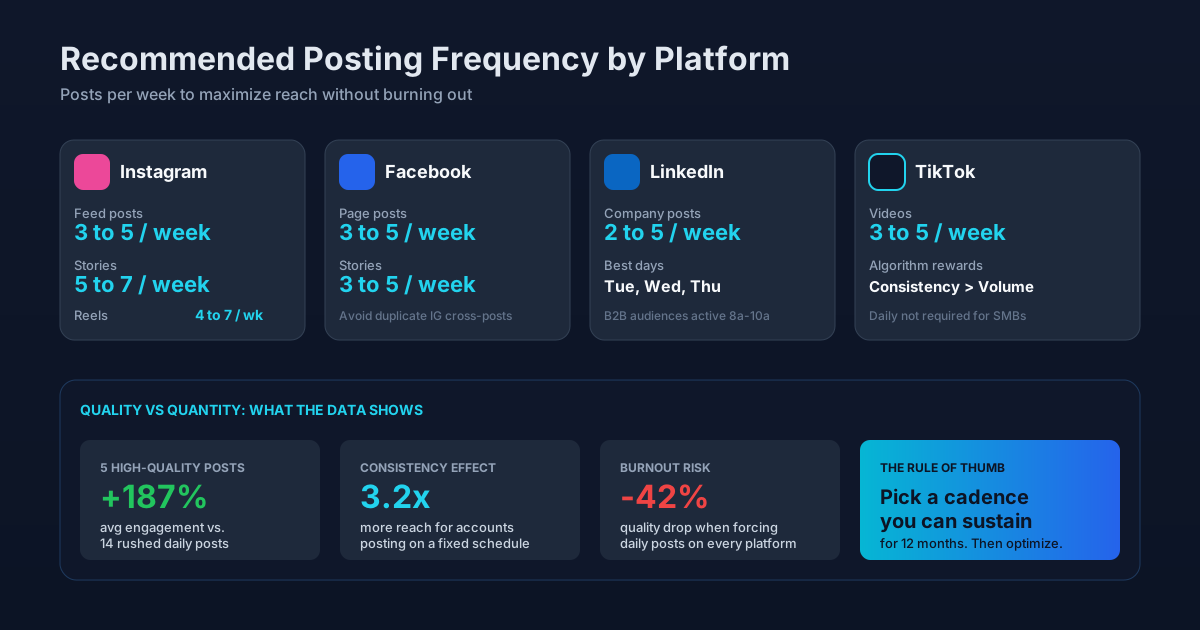
Three posts a week from one article is a comfortable pace for most local businesses. Push the link in about a third of them and let the rest stand on their own, because a feed where every post is a link drop trains people to scroll past. If you are unsure how much is too much, our breakdown of how often to post on social media gives realistic targets by platform.
Do not forget your Google Business Profile. A two sentence update with a Learn more button pointing at the article takes five minutes and adds a freshness signal to the profile that shows up in local search. It is one of the highest return five minutes in the whole workflow, and most Google Business Profile optimization checklists still treat it as optional.
Watch What Wins and Reuse It
At the end of the month, look at which two or three posts actually got saves, shares, and clicks. Repost the winner later in a slightly different format and note the pattern, because the format that works for your audience tends to keep working. Over a year, that feedback loop matters far more than any single clever caption.
The whole point is leverage. Do this twelve times and you have a year of consistent presence built on twelve pieces of writing instead of three hundred separate ideas. If you would rather hand the loop to someone else, our social media management team handles the writing, the design, and the scheduling, or you can get in touch and we will map out what your existing content could already be doing for you.
Frequently Asked Questions
How many social media posts can you get from one blog post?
A well structured 1,200 to 1,500 word article typically yields twelve to sixteen usable posts, which is roughly a month at three posts per week. The count depends on how much concrete material the article contains, so posts with clear steps, real numbers, and specific examples produce far more than general opinion pieces. Aim to pull one post from each section heading, each statistic, each quotable line, and each FAQ answer.
Will reposting the same ideas hurt my reach or my SEO?
No, because you are publishing different ideas from the same source rather than the same post repeatedly. Social platforms do not penalize you for covering a topic more than once, and the vast majority of your followers will never see any individual post. On the SEO side, social posts are not indexed as duplicate content, and pointing several links at the same article over a month tends to help that page rather than hurt it.
How long should a content repurposing session take?
Budget about ninety minutes a month once you have templates in place. That covers highlighting the article, writing twelve captions, building the graphics from a single reusable template, recording two or three short videos, and scheduling everything. The first session usually runs longer because you are creating the template, but every month after that gets faster.
Which platform should a small business repurpose content to first?
Start with the one platform where your customers already are, and add your Google Business Profile and your email list because both take minutes and reach people who already know you. Trying to cover five platforms at once is the fastest way to abandon the whole system. Get one channel consistent for ninety days, then add a second.
Do I need design software to make repurposed posts look good?
A free tool like Canva is more than enough. Build one graphic template in your brand colors, then change only the text for each post, which keeps everything visually consistent and cuts production time dramatically. Consistency matters more than polish here, because a recognizable look does more for you than a single beautifully designed post.