Open any social media advice article and you'll find conflicting answers. Post daily. Post hourly. Post only when you have something valuable to say. For a small business owner already wearing five hats, the noise is exhausting, and following the wrong advice can drain hours every week with little to show for it.
The honest answer is that posting frequency matters less than most people think. Consistency, content quality, and platform fit matter far more. This guide walks through realistic posting cadences for the major platforms and what actually drives results, based on what we see across our social media management clients.
Why Frequency Is the Wrong Question to Start With
Most posting frequency advice ignores a simple reality: a small business cannot sustainably produce great content for five platforms, every day, forever. When you try, quality crashes. Captions get rushed. Photos get repetitive. Engagement drops, and the algorithm responds by showing your posts to fewer people.
The right starting question isn't "how often should I post?" It's "what cadence can I maintain for the next 12 months without sacrificing quality?" Whatever that number is, that's your answer. Algorithms reward consistency far more than they reward volume.
Recommended Frequency by Platform
Here's what the data and our experience point to as a sustainable, high-performing posting cadence for most small and medium businesses in 2026.
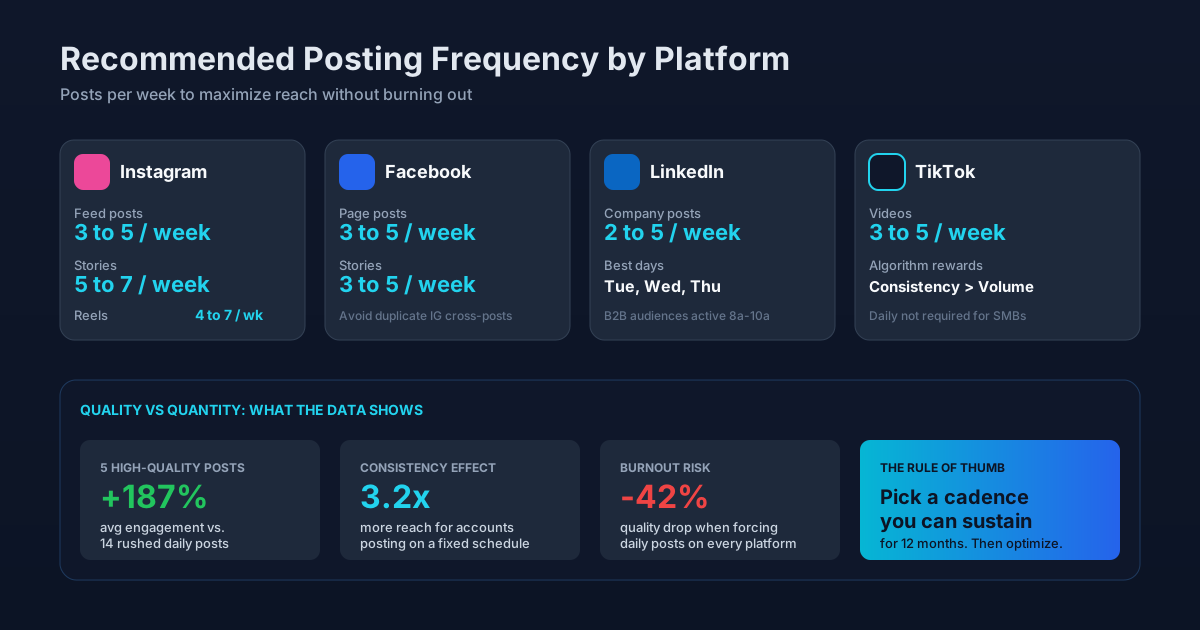
Instagram: 3 to 5 feed posts per week, 5 to 7 stories per week, and 4 to 7 Reels per week if video is part of your strategy. Reels currently get the largest organic reach boost on Instagram, so prioritizing them is a high-leverage move.
Facebook: 3 to 5 page posts per week. Facebook organic reach is the lowest of the major platforms, so volume matters less than picking content that drives saves, comments, and shares. A great post once every two days beats a forgettable post every day.
LinkedIn: 2 to 5 posts per week, ideally Tuesday through Thursday between 8 AM and 10 AM when professional audiences are most active. LinkedIn rewards thoughtful, longer-form content, so two strong posts per week often outperform five quick ones.
TikTok: 3 to 5 videos per week. The platform is often portrayed as a daily-posting requirement, but for small businesses, consistency over months matters more than daily volume. A steady cadence of 3 to 5 videos a week, every week, beats a burst of daily posts followed by a month of silence.
Pick One or Two Platforms, Not Five
One of the biggest mistakes we see is small businesses spreading themselves across every platform their competitors use. Each platform has its own content style, audience, and best practices. Trying to be everywhere usually means being mediocre everywhere.
Pick the one or two platforms where your ideal customers spend the most time. For most local service businesses, that's Instagram and Facebook. For B2B and professional services, LinkedIn typically delivers the strongest results. For visually-driven brands and younger audiences, Instagram and TikTok are the go-to. Get great on one or two platforms first, then consider expanding.
What a Sustainable Weekly Schedule Looks Like
A realistic posting schedule isn't built around "post every day." It's built around content batching, a clear weekly rhythm, and a content mix that doesn't require you to reinvent the wheel every time you sit down to post.
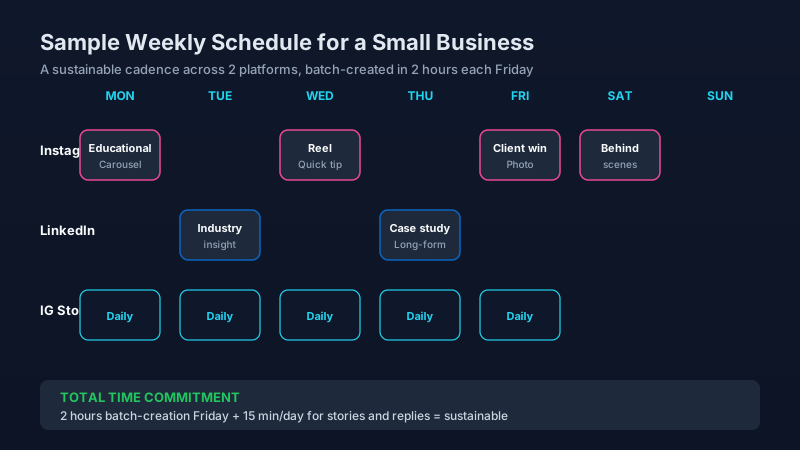
The key idea: batch your content creation into one or two focused sessions per week instead of trying to come up with a post every morning. Two hours every Friday is enough to plan, write, and design the content for the following week. Then your daily commitment shrinks to 15 to 20 minutes for stories, replies, and engagement, which is the part that actually builds relationships.
Quality Beats Quantity, Almost Always
If you remember one thing from this article, make it this: five great posts per week will outperform fourteen rushed daily posts almost every time. We've seen accounts triple their reach by cutting posting volume in half and reinvesting the time into stronger content.
The reason is simple. Algorithms watch how people interact with your posts. If your audience consistently saves, shares, and comments on your content, the platform shows it to more people. If your posts get scrolled past, the platform learns that your content isn't engaging and reduces your reach across the board, including for your future posts.
Treat every post like it represents your brand, because it does. A weak post is worse than no post.
How to Tell If Your Cadence Is Working
Forget vanity metrics. Follower count and likes are easy to track but rarely reflect actual business impact. Focus on metrics that connect to revenue: profile visits, link clicks, DM conversations, lead form submissions, and direct attributions from customers who say they found you on social.
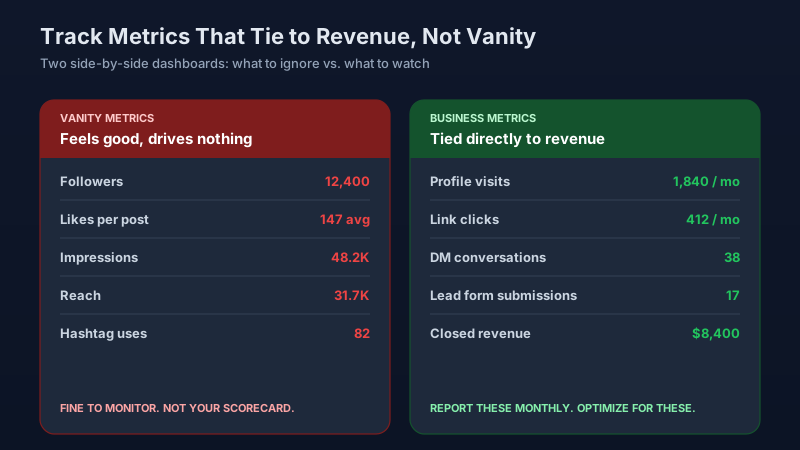
If those numbers are climbing month over month, your cadence is working. If they're flat or falling, the answer is rarely "post more." It's usually "post better." Look at your top three performing posts from the last 90 days and figure out what made them work, then create more content like that. This is the same principle we apply to building a social media strategy that converts: track what drives outcomes, do more of it, cut the rest.
The Bottom Line
For most small businesses, a sustainable posting cadence looks like 3 to 5 high-quality posts per week on one or two carefully chosen platforms, supported by daily stories or quick interactions for engagement. That's it. Anything more is usually overkill, and anything less makes it hard to build momentum.
Pick the cadence you can hold for a year. Then focus all your remaining energy on making each post genuinely worth your audience's attention.
Frequently Asked Questions
Is it better to post once a day or three times a week on social media?
For most small businesses, three high-quality posts a week outperforms one rushed post a day. Algorithms reward engagement, not volume. If you can produce one strong post daily without quality slipping, that's great. If not, fewer posts that get genuine saves, shares, and comments will deliver more reach over time.
What time of day should I post on social media?
It varies by platform and audience, but general benchmarks are: Instagram and Facebook between 11 AM and 1 PM or 7 PM and 9 PM local time, LinkedIn between 8 AM and 10 AM Tuesday through Thursday, and TikTok between 6 PM and 10 PM. The best approach is to use your platform analytics to see when your specific audience is most active and post 30 to 60 minutes before those peaks.
Does posting more often hurt your reach?
It can, especially if quality drops. Some platforms (Facebook in particular) reduce reach when accounts post too frequently and compete with themselves for the same audience's attention. Instagram is more forgiving, but rushed posts that get low engagement signal the algorithm to deprioritize all your future content. Quality over quantity, every time.
How long does it take to see results from social media posting?
Most accounts need 90 to 180 days of consistent posting before organic momentum builds. Algorithms need time to learn what your content is about and who it should be shown to. If you're switching strategies or starting from scratch, give the new cadence at least three months before evaluating performance.
Should I post the same content on every platform?
You can repurpose ideas across platforms, but you should reformat the content for each. A LinkedIn post that works as a 200-word story should be cut down to a punchy caption on Instagram. A vertical Reel should be reformatted for TikTok with platform-native captions and trends. Cross-posting identical content with no adjustments usually performs poorly because each platform has different content norms and audience expectations.