Ask any local business owner what moves the needle on Google, and most will say "rankings." Ask their customers what they actually look at before calling, and the answer is almost always the same: the star rating and the number of reviews. Both matter, and both come from the same source. If you want more local customers, you need more Google reviews, and you need them on a predictable schedule.
Here's the practical playbook we use with local SEO clients to go from a handful of reviews per quarter to 20 to 40 every month, without buying fake ones or annoying loyal customers.
Why Google Reviews Are Worth More Than Almost Any Other Marketing
Three things happen when your review count and rating climb:
- Local pack rankings improve. Review quantity, recency, and average rating are documented ranking factors in Google's local algorithm. Businesses with 50 or more recent reviews routinely outrank competitors with thin or stale profiles, even when the competitor has more backlinks.
- Click-through rates go up. In the local 3-pack, the business with 4.8 stars and 200 reviews gets clicked far more often than the one with 4.6 stars and 30 reviews. Same impressions, more calls and direction taps.
- Conversion rates climb after the click. A prospect who scrolled through 20 recent five-star reviews is already 80% convinced before they pick up the phone. Reviews do the selling that your homepage can't.
This is why review generation belongs on the same priority list as your Google Business Profile setup, not as an afterthought.
The 5-Step Review Generation System
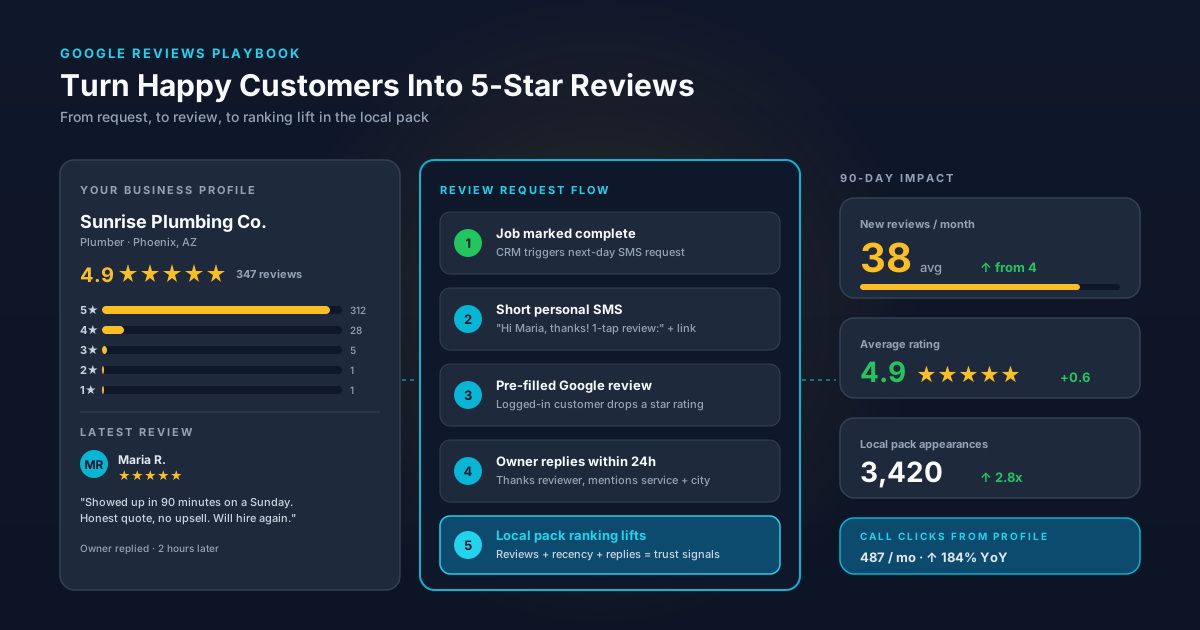
1. Get your short review link. Open your Google Business Profile dashboard and grab the "Get more reviews" short link (it looks like g.page/r/xxxx/review). This link drops customers directly into the review form on whatever device they're using. Save it as a contact in your phone, a saved reply in your CRM, and a button on your invoices.
2. Ask within 24 hours of the wow moment. Timing matters more than wording. The "wow moment" is right after the customer experiences value: the install is done, the meal is finished, the haircut is fresh. Memory and enthusiasm both decay fast, so asking a week later cuts your conversion rate by 75% or more.
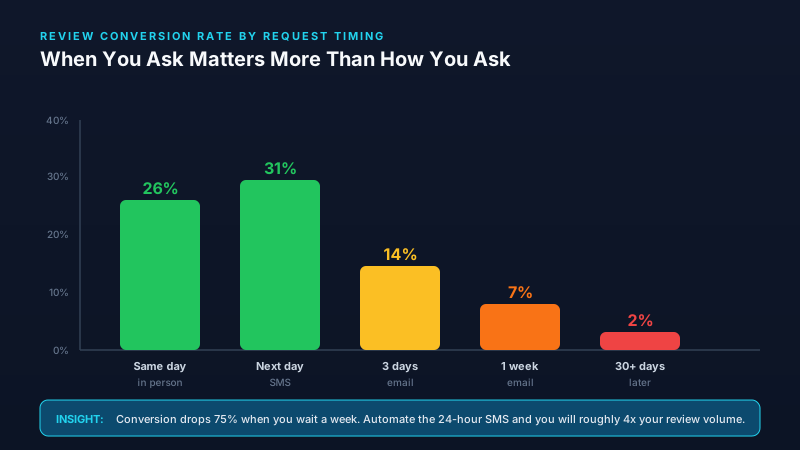
3. Use SMS, not email. Across thousands of review requests, SMS converts at roughly 3x the rate of email. Texts get opened in minutes, sit at the top of the message thread, and let the customer tap once to land on the review form. Keep the message short and personal: "Hi Maria, thanks for choosing us this week. If you have 30 seconds, a quick Google review really helps a small business like ours. [link]"
4. Make it easy on the customer. If the link bounces them through a login screen or asks them to find your business in search, you have already lost most people. Test the flow on your own phone: tap the link, write a review, hit post. If it takes more than 60 seconds, fix the friction. Most CRMs (Jobber, ServiceTitan, HoneyBook, Square) now have one-tap review request automations built in.
5. Reply to every review within 24 hours. Google explicitly states that responding to reviews is a positive ranking signal. More importantly, your replies are read by every future prospect scrolling your profile. A thoughtful reply turns even a 3-star review into social proof that you care.
How to Respond (and How Not To)
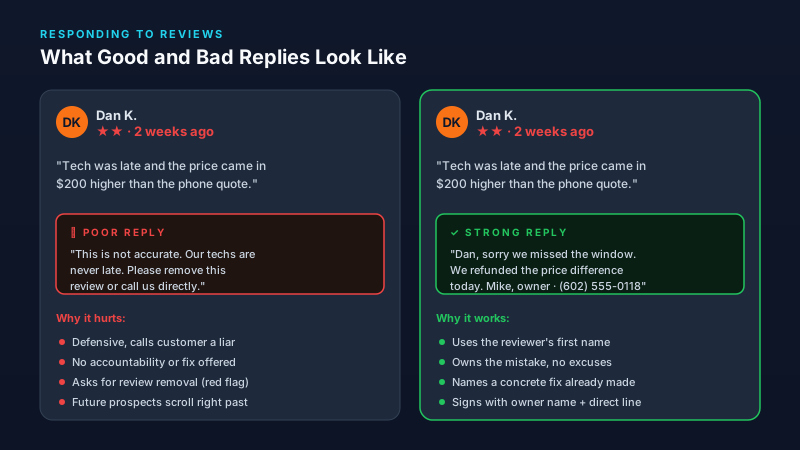
Replies to 5-star reviews should be short, personal, and natural. Thank the customer by first name, reference the specific service or product, and skip the "we appreciate your feedback" template language. The goal is to sound like a real person, because the reader is checking whether you are one.
Negative reviews are where most businesses self-destruct. The instinct is to defend yourself or call the reviewer wrong. Resist it. A calm, accountable reply that names a concrete fix is one of the most persuasive things a future customer can read about your business.
What Not To Do
Two practices will tank your profile faster than slow growth ever will:
- Don't gate reviews. "Review gating" (filtering customers so only happy ones land on Google) violates Google's policies and can get your reviews wiped or your profile suspended. Ask everyone the same way.
- Don't buy reviews or trade them with other businesses. Google's spam detection is aggressive and increasingly accurate. The short-term boost is not worth the long-term penalty risk.
The Bottom Line
Most small businesses are sitting on dozens of happy customers who would gladly leave a review if asked at the right moment in the right way. Build a system: short link saved, SMS automation set up, request fired within 24 hours, owner reply within a day. Do that consistently for 90 days and your local search presence will look like a different business. Pair it with the basics in our guide to SEO mistakes small businesses make, and you have a local SEO foundation that compounds.
Frequently Asked Questions
How many Google reviews does a small business need?
For most local industries, 40 to 50 recent reviews puts you in the upper tier of local pack visibility. Once you cross 100 reviews and stay above a 4.7 average, you usually outrank competitors with weaker profiles on most non-branded local searches. Volume matters, but so does recency: 50 reviews from the last 12 months beats 200 reviews that are all 5 years old.
Is it okay to ask customers for Google reviews?
Yes, Google's policy explicitly allows you to ask customers for reviews, as long as you do not offer compensation, do not filter who gets asked, and do not solicit reviews from people who are not real customers. A simple, neutral request after a real transaction is fully within the rules.
How do I get my Google review link?
Sign in to your Google Business Profile, click the "Get more reviews" or "Ask for reviews" option on the dashboard, and copy the short link. The link drops the customer directly into the review form. Save it in your CRM, on your invoice template, and as a saved text reply on your phone.
What should I do about fake or unfair negative reviews?
Flag the review through Google Business Profile and report it as a policy violation if it qualifies (fake review, conflict of interest, hate speech, off-topic content). In parallel, reply publicly with a calm, factual response that future readers will see. Removal can take days or weeks, and not every flagged review gets removed, so the public reply often does more good than the flag itself.
How long until more Google reviews actually move my rankings?
Most businesses see local pack ranking shifts within 60 to 90 days of starting a consistent review request system, assuming they are also responding to reviews and keeping their Google Business Profile updated. Reviews compound: the longer you keep the system running, the bigger the gap between you and competitors who only ask sporadically.