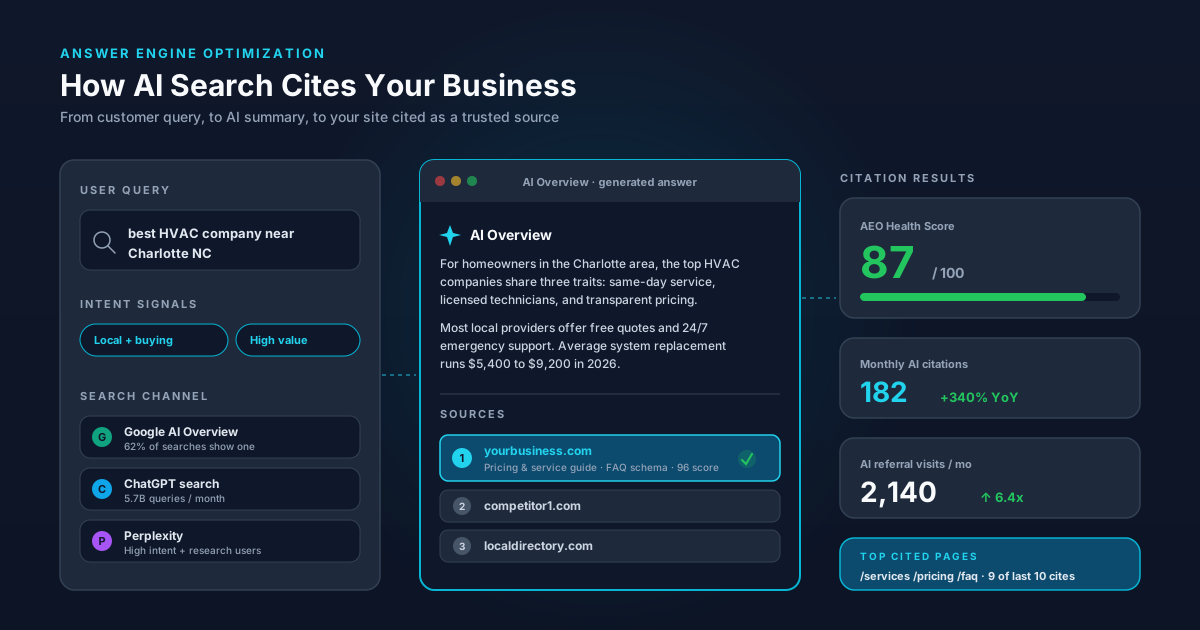
Open Google in 2026 and the first thing many people see is no longer a list of blue links. It's a paragraph. An AI Overview answer summarizes the web and cites a few sources at the bottom. ChatGPT and Perplexity work the same way. For small businesses, the question has shifted from "how do I rank on Google?" to "how do I get cited when an AI answers my customer's question?"
That practice has a name: Answer Engine Optimization, or AEO. It overlaps heavily with traditional SEO, but the rules are slightly different. Here's how to make sure your site shows up where customers are increasingly looking for answers, based on what we see across our SEO clients.
What Answer Engine Optimization Actually Is
Answer Engine Optimization is the practice of structuring your content so AI tools (ChatGPT, Perplexity, Claude, Google AI Overviews, Gemini) can extract clean, accurate answers and cite your business as the source. Think of it as SEO for the era when the search result is a synthesized paragraph instead of ten links.
The good news for small businesses: AEO and SEO share most of the same fundamentals. If your site already ranks well for relevant queries, you're already partway there. The bad news: AI tools have a sharper preference for specific content patterns, and many sites that rank well today are getting passed over for citations.
How AI Search Tools Choose Sources
AI search tools don't think like Google's old algorithm. They scan for content that already answers a question in a clear, structured way, and they prefer sources that:
- Answer the question directly in the first one or two sentences
- Use plain language without marketing fluff
- Include real numbers, dates, and specifics
- Have clean HTML structure (proper headings, lists, FAQ blocks)
- Come from sites with topical authority and good reputation signals
If your blog opens with "In today's fast-paced digital landscape," an AI is going to skip you and pick the source that gets to the point.
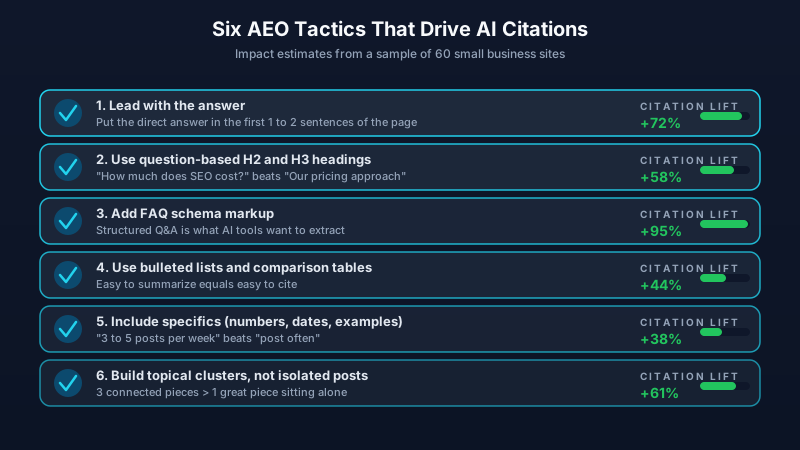
Six AEO Tactics That Actually Move the Needle
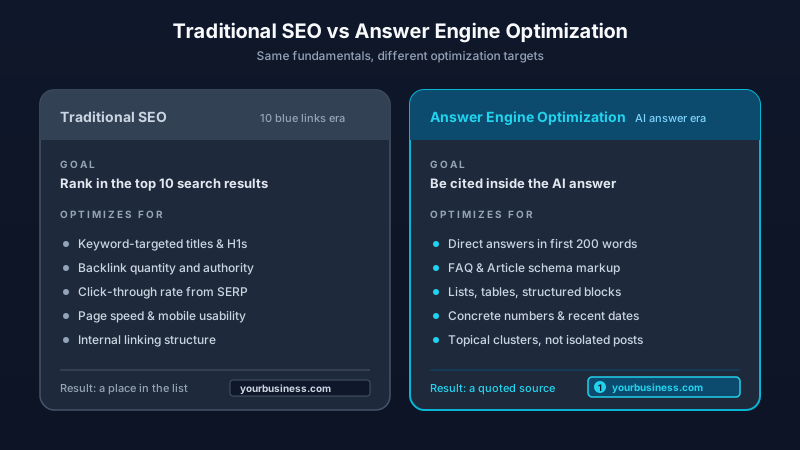
1. Lead with the answer. For every page that targets a question, put the direct answer in the first paragraph, then expand with detail. AI tools often pull only from the first 200 to 300 words.
2. Use question-based headings. H2 and H3 tags that match how people actually ask things ("How much does SEO cost for a small business?") are easier for AI to map to user queries.
3. Add structured FAQ sections. Pages with FAQ schema markup get cited disproportionately often. They're already in the question-and-answer format AI tools want to extract.
4. Use lists and tables. AI tools love structured data because it's easy to summarize. A bulleted list of "five things" or a comparison table will outperform the same content as a dense paragraph almost every time.
5. Include specifics and recent data. Concrete numbers ("3 to 5 posts per week" beats "post often") and a recent publish or update date both help. AI tools deprioritize content that feels stale or vague.
6. Build topical authority, not just backlinks. AI tools weigh how often your site is mentioned across the web in connection with a topic. Three solid pieces of content on the same theme beat one piece sitting alone on your blog.
What This Means for Your Content Calendar
If you've been writing two-paragraph "blog posts" mainly for branding, the math has shifted. AEO rewards depth, structure, and clarity. A 1,200-word piece that thoroughly answers one question with FAQ markup, examples, and concrete numbers will outperform five thin posts that try to cover everything.
Practical changes to make this month: audit your top 10 pages and add a clear answer-first opening; add an FAQ block to every service page and major blog post; refresh older posts with current dates and updated statistics; and pick one topic cluster (such as local SEO for restaurants) and publish three connected pieces over the next 60 days. The same fundamentals apply that we cover in our guide to common SEO mistakes small businesses make: clean structure, real specifics, no fluff.
Don't Forget Traditional SEO
AEO doesn't replace SEO. AI tools still mostly pull from sites that already rank in traditional search results. Technical hygiene (page speed, mobile usability, clean URL structure) and on-page basics (titles, meta descriptions, internal linking) remain the foundation. AEO is the layer on top, not a substitute. If you haven't audited the basics in a year, start there.
The Bottom Line
The search interface is changing fast, but the underlying principle hasn't. Sites that publish clear, accurate, well-structured answers get found, whether the searcher is reading blue links, an AI Overview, or a ChatGPT response. Make your content easy to extract, easy to verify, and easy to trust, and you'll show up wherever your customers are looking.
Frequently Asked Questions
What is answer engine optimization (AEO)?
Answer engine optimization is the practice of structuring web content so AI search tools like ChatGPT, Perplexity, and Google AI Overviews can extract clear answers and cite your site as a source. It's closely related to traditional SEO but emphasizes direct answers, structured data, and topical depth over pure keyword ranking.
How is AEO different from traditional SEO?
Traditional SEO optimizes content to rank in lists of search results. AEO optimizes content to be quoted or summarized in AI-generated answers. The two share most fundamentals (technical health, quality content, authority), but AEO puts extra weight on answer-first writing, FAQ schema, and structured formats like bullet lists and comparison tables that AI can extract cleanly.
Will ChatGPT and AI search replace Google for finding businesses?
Probably not entirely, but the share of searches handled by AI tools is growing fast. As of 2026, AI Overviews appear on a large share of Google queries and ChatGPT search has become a real referral source for many sites. Most small businesses should plan for a hybrid future where both traditional rankings and AI citations drive traffic.
Do I need schema markup for AI search?
Yes, FAQ and Article schema in particular. AI tools rely heavily on structured data to understand the topic and intent of a page, and pages with clean schema get cited noticeably more often. The good news: most modern CMS platforms can add it with a plugin or built-in setting, and Next.js sites can ship JSON-LD blocks directly in the page.
How long does it take to see results from AEO?
Plan for 60 to 120 days before you see meaningful citation activity from major AI tools. Indexing and reputation signals take time, and it can take a few crawl cycles before AI retrieval pipelines pick up your updated content. Start with your highest-traffic pages and expand from there.