Here is the mistake almost every small business makes with SEO: they decide what they want to rank for based on gut feel, build a few pages around those terms, and then wonder why the traffic never shows up. Usually one of two things is wrong. Either the keyword is so competitive that no small site will ever crack page one, or it is a phrase that, honestly, nobody actually types into Google.
Keyword research fixes both problems. It is the process of finding the exact words your potential customers use, then sorting those words by how realistic they are to rank for. You do not need a $200-a-month tool or an agency to do it. You need a repeatable process and an afternoon. Here is the one we use for every new SEO client.
Start With Seed Keywords (the Obvious Stuff)
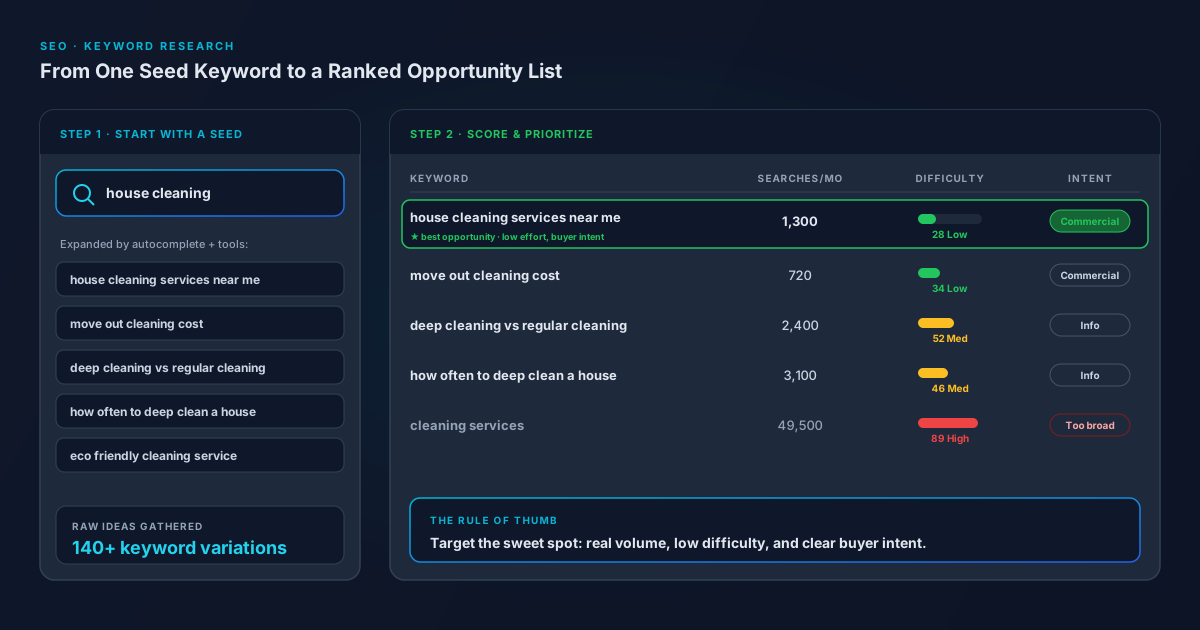
Seed keywords are the broad terms that describe what you do. A house cleaning company starts with "house cleaning," "maid service," and "deep cleaning." Write down five to ten of these. Do not overthink it. These are not the keywords you will target, they are the starting point you will expand from.
The fastest way to expand a seed is Google itself. Type your seed into the search bar and look at the autocomplete suggestions. Then scroll to the bottom of the results page and read the "People also ask" and "Related searches" boxes. Every one of those is a real query that real people type. Free tools like Google Keyword Planner, AnswerThePublic, and Google Trends will pour even more variations into your list.
Sort Your List by Search Intent
Volume is not the only thing that matters. What the searcher actually wants matters more. This is called search intent, and getting it wrong is why so many ranking pages never convert. Someone searching "what is a deep clean" wants to learn. Someone searching "house cleaning services near me" wants to hire. Those need completely different pages.
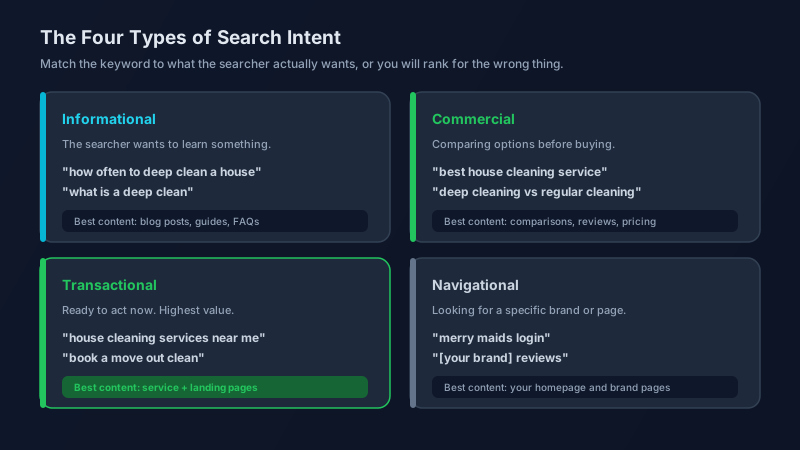
A healthy SEO plan covers all four types, but it prioritizes the transactional and commercial keywords for your money pages and uses the informational ones to fuel your blog content. That blog content then builds the topical authority that helps your money pages rank.
Filter for the Sweet Spot
Now comes the part that separates a useful keyword list from a wish list. Every keyword has a difficulty score (how hard it is to rank for) and a search volume (how many people look for it each month). Free tools like Keyword Planner give you volume ranges, and browser extensions like Keywords Everywhere or the free tier of Ubersuggest add a difficulty estimate.
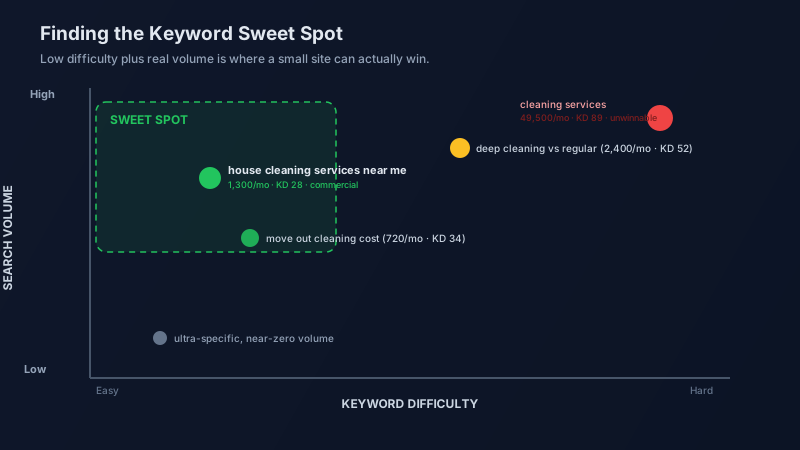
The broad head terms ("cleaning services," 49,500 searches a month) look tempting, but a difficulty score in the 80s means you are competing against national brands with thousands of backlinks. You will not win. Instead, chase the long-tail keywords: longer, more specific phrases with lower volume but far lower difficulty and much clearer intent. "House cleaning services near me" or "move out cleaning cost" will not make you famous, but they bring in people ready to book.
Turn the List Into a Plan
Group your winning keywords by topic, then map each group to one page. One primary keyword per page, with a handful of closely related variations supporting it. Your service pages get the transactional terms. Your blog gets the informational and commercial ones. Then revisit the list every quarter, because search behavior shifts and new opportunities open up constantly.
Keyword research is not a one-time task you check off. It is the foundation that makes every other SEO effort pay off, and it costs nothing but a focused afternoon. Do it before you write a single page, and you stop guessing about what your customers want.
Frequently Asked Questions
Can I do keyword research for free?
Yes. Google's own tools cover most of it: autocomplete, the "People also ask" and "Related searches" boxes, Keyword Planner, and Google Trends are all free. Free browser extensions like Keywords Everywhere or the free tier of Ubersuggest add difficulty and volume estimates. Paid tools like Ahrefs or Semrush are faster and more detailed, but they are not required to find good keywords.
What is a long-tail keyword and why do they matter for small businesses?
A long-tail keyword is a longer, more specific search phrase, like "affordable move out cleaning in Tampa" rather than just "cleaning." They have lower search volume but also far lower competition and clearer buyer intent, which makes them the most realistic terms for a small site to rank for and the ones most likely to convert into customers.
How many keywords should each page target?
Focus each page on one primary keyword, supported by a small cluster of closely related variations. Trying to rank a single page for many unrelated keywords usually means it ranks well for none of them. If you have several distinct keyword topics, build a separate page for each one.
How often should I redo my keyword research?
Review your keyword list every quarter. Search behavior changes, competitors enter and exit, and new questions emerge constantly. A quarterly check lets you spot fresh opportunities and retire terms that are no longer worth chasing without turning research into a full-time job.