Open almost any small business website and you will find one page called Services. It lists five or six things the company does, gives each a friendly paragraph about quality and experience, and ends with a contact button. Then the owner wonders why the site ranks for the company name and almost nothing else, and why the people who do land there leave without calling.
Google Ranks Pages, Not Businesses
Someone in a hurry types "emergency ac repair scottsdale" or "how much does duct cleaning cost." Nobody types "services." A combined page is competing against pages that are entirely about the one thing being searched for, and depth wins that fight almost every time.
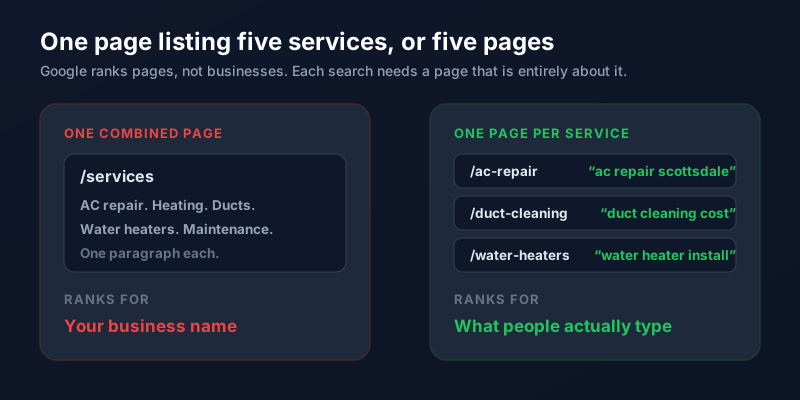
The fix is unglamorous. Give every service you actually want customers for its own page, with its own URL, its own headline, and enough substance that someone could decide to hire you without leaving it. Three strong pages beat eight thin ones, so start with the services that make you the most money.
Write the Headline in the Customer's Words
Your headline should contain the service and the place you serve, phrased the way a person would say it out loud. "Water Heater Repair and Replacement in Tempe" works. "Comprehensive Residential Solutions" does not, because nobody searches for it and nobody understands it. If you are not sure which phrasing people use, a few minutes of keyword research will tell you, and the autocomplete suggestions in Google are free.
Six Blocks, In This Order
A service page that converts answers questions in the order a visitor thinks of them. Skip a block and they go back to the search results to find someone who answered it.
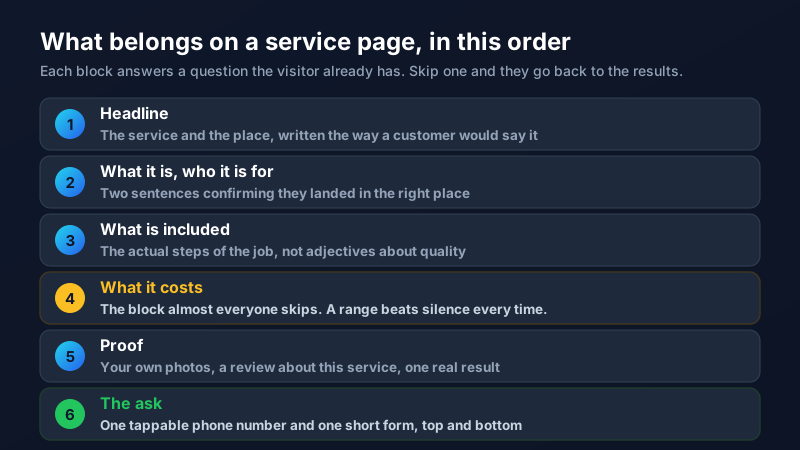
Notice that most of this is information you already have. You explain it on the phone several times a week. The page is just that explanation, written down once, where search engines can read it too.
Say Something About Price
This is the block small businesses fight hardest and it is the one that changes results most. A visitor who cannot find any hint of cost assumes the worst and keeps looking. A range, a starting price, or even an honest explanation of what makes a job cheaper or more expensive does two useful things: it keeps the people who can afford you, and it filters out the tire kickers before they take an hour of your day.
One Ask, Repeated
Put your phone number near the top as a tappable link, not as plain text an iPhone user has to copy. Put a short form at the bottom. Ask for the same thing in both places. Pages that offer four different next steps get fewer of all of them, which is the same principle behind landing page optimization. If a call is what you want, ask for the call.
Connect It To the Rest of the Site
A new page with no links pointing at it is hard for Google to find and easy for it to ignore. Link to each service page from your main navigation, from your homepage, and from any blog post that touches the topic, using the service name as the link text. Our guide to internal linking covers how to do that without making a mess. Then add the same services to your Google Business Profile, where the service descriptions can point back to the matching page.
Check Whether It Worked
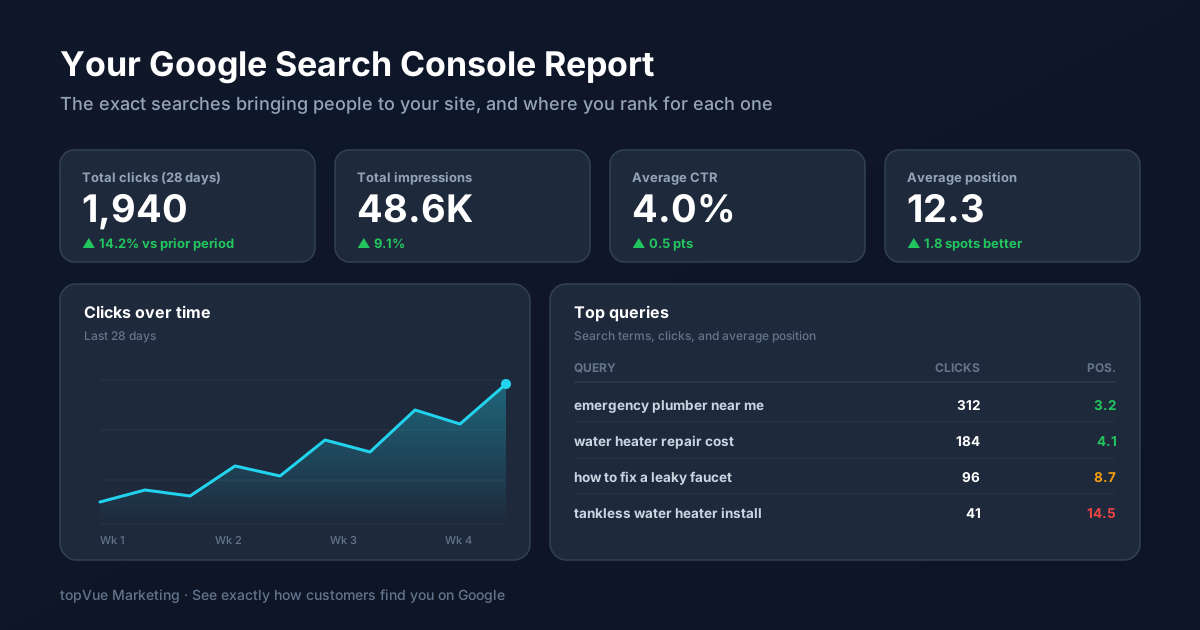
Give it six to eight weeks, then open Search Console, filter to the new URL, and look at the queries it is picking up. You will usually find phrases you never thought to target, which tells you what to add next. A service page is not a thing you publish once. It is the page you improve every time a customer asks you a question you had not written down yet.
If you have one Services page carrying the whole business and you want a plan for splitting it up, get in touch and we will map it out with you.
Frequently Asked Questions
Should each service have its own page or can I list them all on one page?
Give each service you want customers for its own page. Google ranks individual pages against individual searches, and a page covering six services cannot compete with a page devoted entirely to the one being searched for. Keep a short overview page that links out to each service page if you like the structure, but the depth has to live on the individual pages.
How long should a service page be?
Long enough to answer every question a customer asks on the phone, which usually lands between 600 and 1,200 words. Length is not the goal. A 700 word page that covers what is included, what it costs, and what happens next will outperform a 2,000 word page padded with generic paragraphs about commitment to excellence.
Should I put prices on my service pages?
Include a range or a starting price wherever you reasonably can. Visitors who find no pricing information at all assume it is expensive and keep shopping, and the leads you do get are less qualified. If every job is genuinely custom, explain the three or four factors that move the price up or down so the reader can place themselves on the scale.
Do I need a separate page for every city I serve?
Only if you can write something genuinely different for each one. Near duplicate pages with the city name swapped out are a well known pattern that adds little value. Start with one strong page per service that names your service area, and build dedicated city pages later for the specific markets where you truly compete.
How long until a new service page starts ranking?
Expect a few weeks before Google indexes and settles it, and roughly two to three months before the position stabilizes. Submit the URL in Search Console once it is live, link to it from existing pages so it is easy to find, and check the queries it earns after eight weeks rather than checking rankings every day.