You could have the best PPC campaigns in the world, but if your landing page doesn't convert, you're pouring money down the drain. A landing page is the bridge between a click and a customer. When that bridge is shaky, visitors bounce. When it's solid, your cost per lead drops and your revenue climbs.
The good news? Landing page optimization doesn't require a redesign from scratch. Small, targeted changes to your page structure, copy, and layout can produce dramatic results. Here's what actually moves the needle.
Start With One Clear Goal
The biggest mistake businesses make with landing pages is trying to do too much. A landing page is not your homepage. It exists for one purpose: to get the visitor to take a single action. That might be filling out a form, booking a call, or requesting a quote.
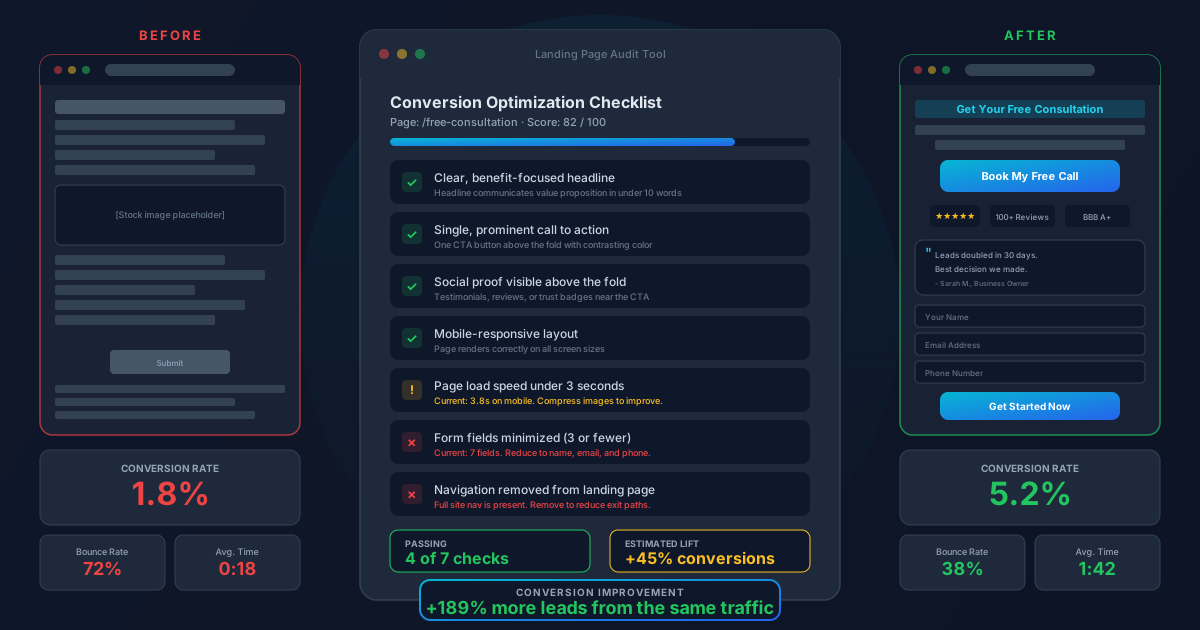
Everything on the page should support that one goal. If an element doesn't push the visitor toward your call to action, it's a distraction. Remove the main navigation menu, sidebar links, and footer links. Every exit path you eliminate increases the chance that visitors complete your desired action.
Write a Headline That Speaks to the Visitor's Problem
Your headline is the first thing visitors read, and for many of them, it's the last. Studies consistently show that the majority of visitors decide whether to stay or leave within five seconds of landing on a page. Your headline needs to earn those seconds by immediately communicating what the visitor will get.
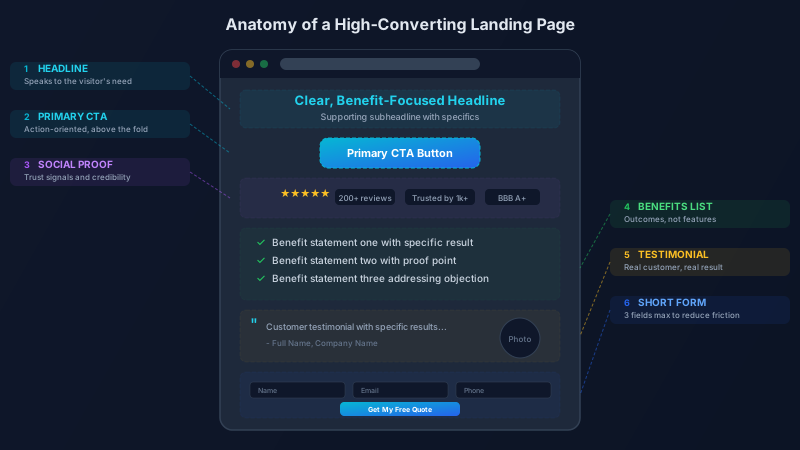
Weak headlines focus on the business: "Welcome to Our Company." Strong headlines focus on the visitor: "Get More Customers Without Spending More on Ads." Lead with the outcome your visitor wants, and be specific about how you deliver it.
Make Your Call to Action Impossible to Miss
Your CTA button should be the most visually prominent element on the page. Use a contrasting color that stands out from the rest of the design, and make the button large enough to tap easily on mobile. Place it above the fold so visitors don't have to scroll to find it.
The text on your button matters too. "Submit" is generic and forgettable. "Get My Free Quote" or "Book My Consultation" tells the visitor exactly what happens next and reinforces the value they're about to receive.
Reduce Form Friction
Every additional form field you add reduces your conversion rate. If you're asking for a name, email, phone number, company name, job title, budget, and a message, you're asking too much. For most lead generation pages, three fields (name, email, phone) are enough to start a conversation.
You can always collect more information later in the sales process. The landing page's job is to start the relationship, not to qualify every detail upfront.
Add Social Proof Close to the CTA
People look to others when making decisions, especially when they're considering a new business. Testimonials, review counts, client logos, and trust badges all reduce the perceived risk of taking action. Place these elements near your call to action where they can reinforce the visitor's decision at the moment it matters most. Building trust is just as important as avoiding common SEO mistakes when it comes to converting organic traffic.
A single testimonial with a real name, photo, and specific result ("Our leads increased 40% in the first month") is worth more than a dozen vague quotes.
Speed and Mobile Performance Are Non-Negotiable
If your landing page takes more than three seconds to load on mobile, you're losing visitors before they even see your headline. Compress images, minimize scripts, and test your page on real devices. Google's PageSpeed Insights is a free tool that will tell you exactly what's slowing your page down.
More than half of all web traffic now comes from mobile devices. If your landing page isn't mobile-friendly, you're ignoring the majority of your potential customers.
Test, Measure, and Iterate
Optimization is not a one-time project. The best-performing landing pages are the result of ongoing testing. Start with the highest-impact elements: your headline, CTA button text, and form length. Run A/B tests, track your conversion rate, and let the data guide your decisions.
Even small improvements compound over time. Raising your conversion rate from 2% to 4% means doubling your leads from the exact same traffic, with zero additional ad spend.
Frequently Asked Questions
What is a good conversion rate for a landing page?
The average landing page conversion rate across industries is around 2% to 5%. Top-performing landing pages convert at 10% or higher. Your target depends on your industry and traffic source, but if you're below 2%, there's significant room for improvement through headline, CTA, and form optimization.
What is the difference between a landing page and a homepage?
A homepage serves as a general introduction to your business with multiple navigation options and content areas. A landing page is designed for a single purpose: getting the visitor to take one specific action. Landing pages remove distractions like navigation menus and focus entirely on converting the visitor.
How many form fields should a landing page have?
For most lead generation landing pages, three fields (name, email, and phone number) strike the right balance between gathering useful information and minimizing friction. Each additional field you add reduces conversion rates. Collect only what you need to start the conversation, and gather more details later in your sales process.
Should I remove navigation from my landing page?
Yes. Removing the main navigation menu from your landing page is one of the simplest ways to improve conversions. Navigation links give visitors exit paths away from your call to action. Studies show that removing navigation can increase conversion rates by 20% or more because visitors stay focused on the page's primary goal.
How do I know if my landing page is working?
Track your conversion rate (the percentage of visitors who complete your desired action), bounce rate (the percentage who leave without interacting), and average time on page. Use tools like Google Analytics to monitor these metrics. If your conversion rate is below your industry average, test changes to your headline, CTA, or form to identify what's holding visitors back.