Ask ten small business owners how they set their marketing budget and you will get ten different answers. Some pick a number that "feels right." Some spend whatever is left over at the end of the month, which is usually nothing. Others throw money at whichever ad rep called them most recently. None of these is a plan, and all of them lead to the same place: spending that cannot be defended and results nobody can measure.
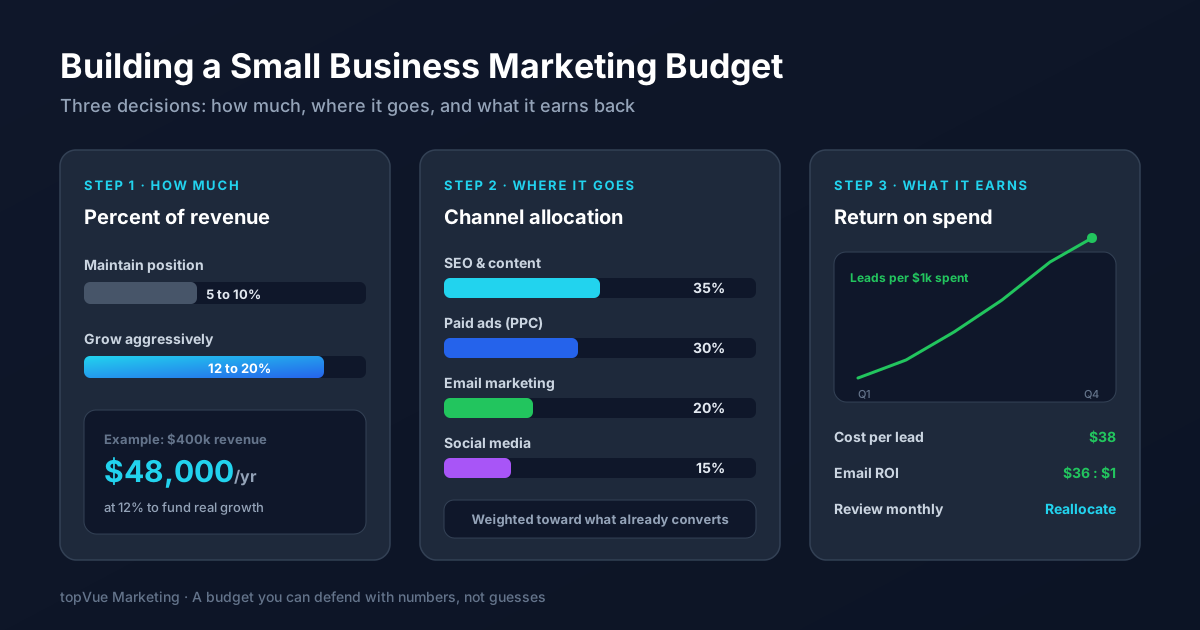
A real marketing budget answers three questions in order. How much should you spend? Where should that money go? And how will you know it worked? Get those three right and your marketing stops being a gamble and starts being an investment with a return you can track. Here is the framework we use with every client.
Step 1: Decide How Much, as a Percent of Revenue
The most reliable way to size a marketing budget is to tie it to your revenue, not to a gut feeling. This keeps spending proportional to the size of your business and scales naturally as you grow. The common ranges are simple. If you mostly want to hold your current position, budget 5 to 10 percent of gross revenue. If you are trying to grow aggressively and take market share, plan for 12 to 20 percent.
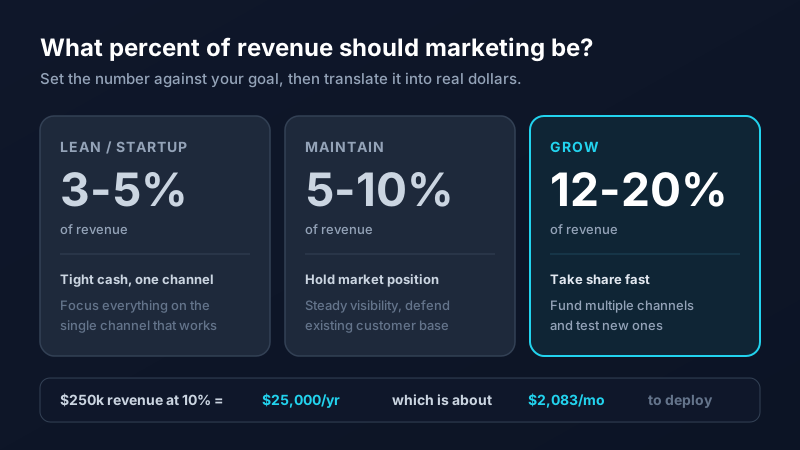
The key move is to convert that percentage into a concrete monthly number. A business doing $250,000 a year that commits 10 percent has $25,000 annually, or about $2,083 a month, to work with. Now the budget is no longer abstract. It is a spending limit you can build a plan around.
Step 2: Split the Budget Across Channels
Once you know the total, the next question is where it goes. The biggest mistake here is spreading money evenly across every channel out of fairness. Your budget is not a participation trophy. It should be weighted toward what already converts and away from what does not.
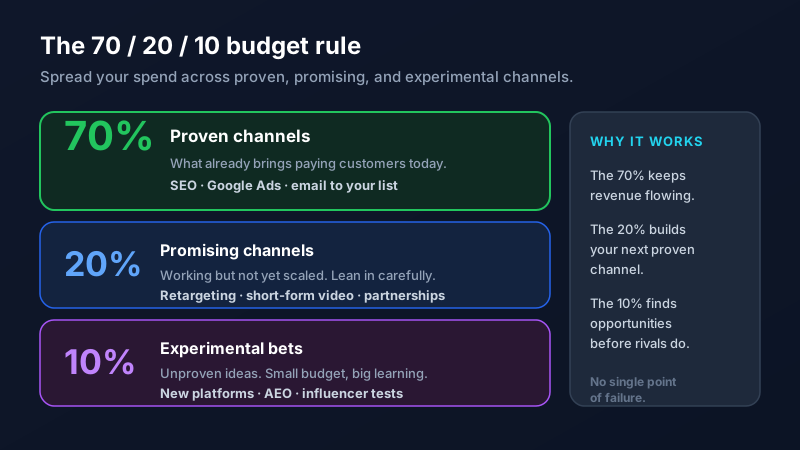
A helpful starting structure is the 70/20/10 rule. Put 70 percent of your budget into proven channels that reliably bring in paying customers, such as search engine optimization and Google Ads. Put 20 percent into promising channels that are working but not yet scaled, like retargeting or short-form video. Reserve the final 10 percent for experiments. Within your proven 70 percent, lean on the channels with the best economics. Email marketing routinely returns around $36 for every $1 spent, which is why it deserves a meaningful slice even on a small budget.
Step 3: Tie Every Dollar to a Number
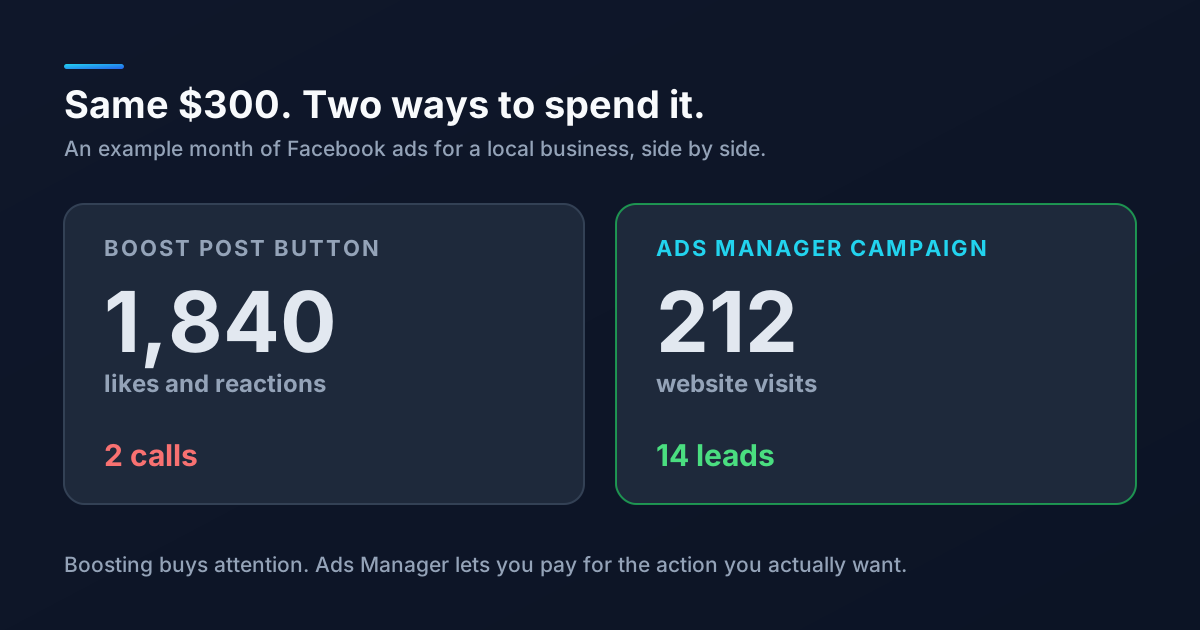
A budget you cannot measure is just a way to lose money slowly. Before you spend, decide what each channel is supposed to produce: leads, calls, form fills, or sales. Then set up the tracking to actually capture it. If you run paid ads, proper conversion tracking is non-negotiable, because without it you are guessing which campaigns deserve more money.
Watch a few core metrics: cost per lead, cost per acquisition, and overall return on ad spend. These tell you which channels are pulling their weight and which are quietly draining the budget. A channel with a $38 cost per lead that closes well deserves more next month. One with a $300 cost per lead and no closes deserves to be cut.
Review Monthly and Reallocate
Your budget is not a document you write once in January and forget. The businesses that get the most from their spend treat it as a living allocation, reviewing performance every month and shifting dollars from the losers to the winners. The percentages stay roughly fixed, but the specific channels earning that money should change as the data comes in. If you would rather hand the whole process to a team that lives in these numbers, our marketing strategists can build and manage the plan for you.
Frequently Asked Questions
How much should a small business spend on marketing?
A common benchmark is 5 to 10 percent of gross revenue to maintain your current position, or 12 to 20 percent if you are trying to grow aggressively. Newer or cash-tight businesses often start at 3 to 5 percent focused on a single channel. The most important step is to convert that percentage into a concrete monthly dollar figure so you have a real spending limit to plan around.
What is the 70/20/10 marketing budget rule?
The 70/20/10 rule splits your budget by how proven each channel is. Put 70 percent into channels that already bring paying customers, like SEO, Google Ads, and email. Put 20 percent into promising channels that work but are not yet scaled. Reserve 10 percent for experimental bets. This keeps most of your money on what works while still funding the tests that become tomorrow's proven channels.
How do I set a marketing budget with very little money?
Start at 3 to 5 percent of revenue and put nearly all of it into the single channel with the best return for your business. For most local and service businesses that is SEO and Google Business Profile, or email marketing to an existing customer list, since both have low ongoing costs and strong returns. Prove one channel works before you spread your budget across several.
How often should I review my marketing budget?
Review performance monthly. The overall percentage of revenue can stay fixed for the year, but the specific channels earning that money should shift based on results. Each month, move dollars away from channels with a high cost per lead and no closes, and toward the ones producing affordable, qualified leads.
Should I spend on SEO or paid ads first?
It depends on your timeline. Paid ads like Google Ads produce leads almost immediately but stop the moment you stop paying. SEO takes a few months to build but then delivers traffic for years at no per-click cost. Many small businesses run a small ads budget for quick wins while investing in SEO for durable, long-term growth, then rebalance as the SEO results compound.