If you're running Google Ads and feel like your budget disappears faster than it should, your Quality Score might be the culprit. This often-overlooked metric has a direct impact on how much you pay per click and where your ads appear on the page.
What Is Quality Score?
Quality Score is Google's rating of the relevance and quality of your keywords, ads, and landing pages. It's measured on a scale of 1 to 10, with 10 being the best. A high score tells Google your ads are genuinely useful to searchers, which Google rewards with lower costs and better placement.
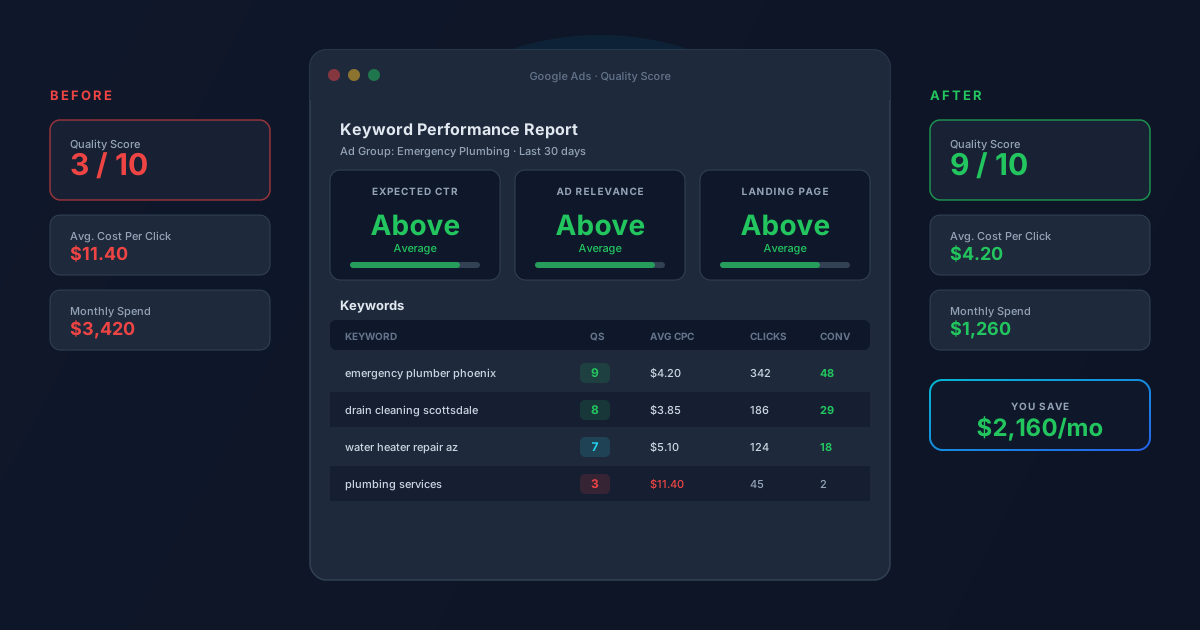
A Quality Score of 7 or above can reduce your cost per click significantly compared to a score of 4 or below. In competitive industries, that difference can mean paying half as much for the same click.
The Three Factors That Drive Quality Score
Google calculates Quality Score based on three components:
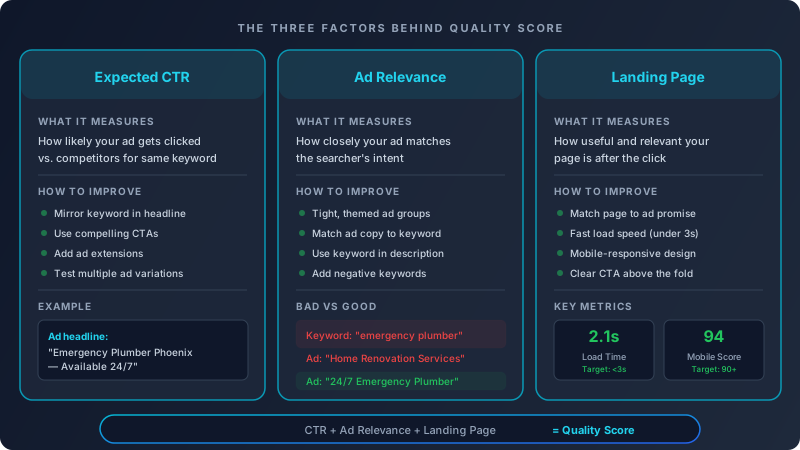
Expected click-through rate (CTR): How likely your ad is to get clicked when it appears for a given keyword. Google looks at your historical CTR relative to other advertisers targeting the same keyword.
Ad relevance: How closely your ad copy matches the intent behind the keyword. If someone searches "emergency plumber Phoenix" and your ad says "Home Renovation Services," the relevance score will be low.
Landing page experience: How useful and relevant your landing page is to someone who clicked your ad. Google looks at page content, load speed, mobile-friendliness, and whether the page delivers on what the ad promised.
How to Improve Each Component
Start with your account structure. The most effective way to improve ad relevance and CTR is to tighten your ad groups so each one covers a narrow theme. Instead of one ad group for "plumbing services" with dozens of keywords, create separate ad groups for "emergency plumber," "drain cleaning," and "water heater repair." This lets you write ads that speak directly to what the searcher typed.
Next, review your ad copy. Your headline should contain or closely mirror the keyword. If someone searched "affordable SEO services Phoenix," your headline should reflect that intent. Generic headlines get lower CTRs, which drags down your Quality Score over time.
Landing page improvement is where many small businesses leave the most money on the table. Your landing page needs to match the promise of your ad, load fast on mobile, and have a clear call to action. It also needs solid SEO fundamentals to perform well organically. If your ad promotes a free consultation, the landing page should lead with that offer, not bury it three scrolls down.
Negative Keywords Matter Too
Adding negative keywords is one of the fastest ways to improve Quality Score. When irrelevant searches trigger your ads, your CTR drops because those users don't click. Lower CTR signals poor relevance to Google. Regularly reviewing your search terms report and excluding terms that don't fit your business keeps your account clean and your scores healthy.
Give It Time, but Monitor Closely
Quality Score updates aren't instant. After making changes, give Google a few weeks of data to recalculate. Check your scores monthly and prioritize keywords with high impression volume and low scores first, as those have the most impact on your overall account efficiency.
Small improvements compound quickly. Raising a handful of high-volume keywords from a 4 to a 7 can meaningfully reduce your monthly spend while maintaining or improving ad position. That's the kind of leverage that makes PPC a powerful channel when managed well.
Frequently Asked Questions
What is a good Quality Score in Google Ads?
A Quality Score of 7 or higher is generally considered good. Scores of 8 to 10 indicate strong relevance between your keywords, ads, and landing pages, and typically result in lower costs per click and better ad positioning than competitors with lower scores.
How does Quality Score affect cost per click?
Google uses Quality Score as part of the Ad Rank formula. Higher Quality Scores lower the amount you need to bid to achieve a given position, which reduces your actual cost per click. Advertisers with low Quality Scores pay more for the same placement compared to advertisers with higher scores.
How long does it take to improve Quality Score?
Quality Score updates as Google collects new performance data, so changes you make today may not be fully reflected for several weeks. Focus on the highest-volume keywords first, give the changes 3 to 4 weeks to accumulate data, then reassess before making further adjustments.
Can a low Quality Score get my ads disapproved?
A low Quality Score won't directly disapprove your ads, but it will make them less competitive and more expensive to run. Extremely low scores (1 to 2) on important keywords are a signal to revisit your entire funnel from keyword to landing page to make sure everything is aligned with what the searcher is looking for.
Should small businesses manage Google Ads themselves or hire an agency?
Small businesses can manage Google Ads themselves if they have time to learn the platform and monitor it consistently. However, a PPC agency can often improve Quality Scores, reduce wasted spend, and deliver better ROI faster because of experience across many accounts. The right choice depends on your budget, time, and internal expertise.